Plantation's council passed tougher dangerous dog rules 5-0 on first reading Nov. 23: $100,000 in liability insurance for owners and a $1,000 top fine. A second vote is needed.
Updated Nov. 25: The council approved the ordinance 5-0 on first reading Nov. 23, with no public speakers, the draft minutes (PDF, large file) show. Council President Denise Horland confirmed it would bring the city into line with state law. It needs a second reading to take effect; it is not on the Dec. 2 agenda, and the city has not posted a date.
Updated Nov. 18: Flooding closed City Hall, and the city moved this meeting from Wednesday to 6 p.m. Monday, Nov. 23, its urgent updates page says. The meeting listing keeps the same agenda, and comments close at 5:30 p.m. Monday. Our flood story has the latest.
Plantation would rewrite its rules for dangerous dogs under an ordinance on the City Council agenda for Monday, Nov. 23, moved from Nov. 18 because of flooding. Owners of a dog the city declares dangerous would need $100,000 in liability insurance. The maximum fine for breaking the rules would double to $1,000 per violation.
The change replaces the city’s “Aggressive Dogs” article with a new “Dangerous Dogs” article. City staff say it brings the code in line with the Pam Rock Act, the state law that changed Chapter 767 of the Florida Statutes on July 1, 2025. Code Enforcement Manager Shakeela Robinson recommended approval in a Nov. 3 memo to the council (PDF).
Overview
- What: a rewrite of Article II of Chapter 4, “Animals,” in the city code.
- When: item 14 at the City Council meeting, 6 p.m. Monday, Nov. 23.
- Biggest changes: $100,000 liability insurance instead of a $10,000 cash escrow, and a maximum fine of $1,000 instead of $500.
- Who it affects: only owners of a dog formally classified as dangerous after an investigation.
What would change for owners
The memo lists these changes:
- The $10,000 escrow of cash or securities is replaced by $100,000 in liability insurance.
- The fine for a violation rises from $500 to $1,000.
- The owner’s duties include notifying the Police Department.
- New rules cover how incidents are investigated and when a dog is held during a hearing or appeal.
- Four old sections, on registration, notice of keeping a dog, hearings and enforcement, are removed and folded into the new text.
Under the draft ordinance (PDF), the owner of a dog declared dangerous would have to register it every year and show:
- that the owner is 18 or older
- a current rabies vaccination certificate
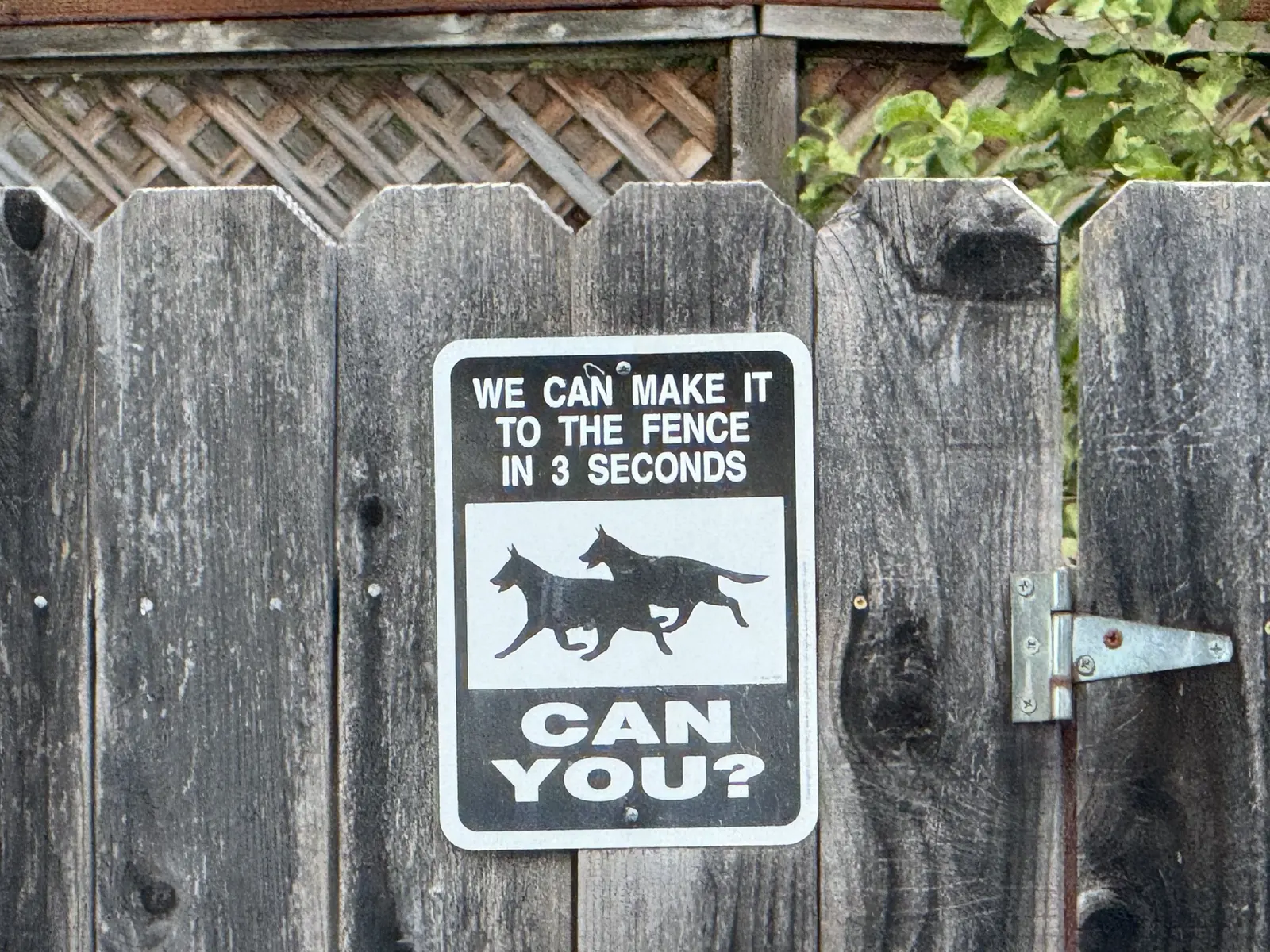
- a proper enclosure, with a warning sign at every entry to the property
- a microchip in the dog
- that the dog has been spayed or neutered
- proof of $100,000 in liability insurance
The owner would also have to pay for an evaluation by a credentialed animal behavior specialist and follow its recommendations. Owners would sign consent for animal control staff to inspect the property, with or without notice. They would also agree to pay the victim’s documented veterinary costs within 15 days.
Outside its enclosure, the dog would have to be muzzled and on a leash or chain, with a competent person in control. Dangerous dogs would be barred from every city park and city-sponsored event. The draft treats each day a violation continues as a separate offense.
How a dog is declared dangerous
The draft keeps the state definition. A dog can be classified as dangerous if it has aggressively bitten, attacked or endangered a person, or severely injured a person. It also covers a dog that has more than once severely injured or killed a domestic animal off its owner’s property. So does a dog that, unprovoked and with no one controlling it, chased or approached a person in public “in a menacing fashion.” That last case needs a sworn statement.
There are exemptions. A dog cannot be declared dangerous if the person was on the property unlawfully, or was tormenting or attacking the dog, its owner or the owner’s family. Dogs protecting a person from an unjustified attack are exempt too, as are police dogs.
Under the draft, the steps are:
- The Police Department and Code Enforcement investigate the report, take sworn statements and, if possible, interview the owner.
- The police chief or a designee decides whether there is enough cause, and notifies the owner in writing.
- The owner has seven calendar days to ask for a hearing. If no request is made, the classification is final.
- A hearing is held five to 21 days after the request, before the city’s special magistrate or Broward County.
- The owner can appeal to the 17th Judicial Circuit.
Serious bites
The draft follows the state’s tougher rule for the worst cases. A dog that has killed a person, or left a bite scoring 5 or higher on the Dunbar bite scale, must be taken by animal control right away. It is held for at least 10 business days, or until any hearings and appeals end. At the end of that period, the draft says, it must be destroyed. A dog cannot be destroyed while an appeal is pending. The owner pays the boarding costs.
A dog already declared dangerous that bites a person or another pet without provocation would also be seized and held for 10 business days. The owner can ask for a hearing in that time.
The draft leaves blanks for a first and a second reading. It takes effect as soon as it is adopted.
What it means for you
- Most dog owners are not affected. The rules apply only after a dog is formally declared dangerous.
- If a neighbor’s dog attacks you or your pet, the city’s process starts with a report to the Plantation Police Department and a sworn statement.
- An owner who gets a notice has seven days to ask for a hearing. Missing that window makes the classification final.
- Leash and park rules for every other dog stay the same. Happy Tails Dog Park remains the city’s only park where dogs are allowed.
- You can comment on item 14 or sign up to speak on the city’s SpeakUp page for the meeting. Comments close at 5:30 p.m. Monday, Nov. 23.
Have your say